
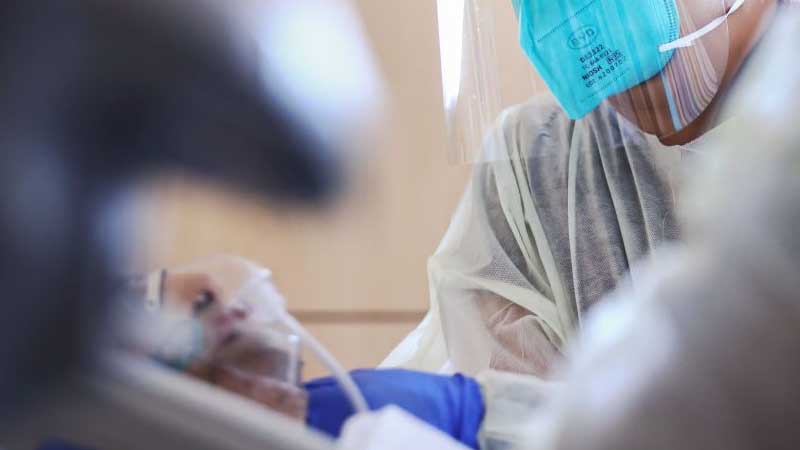
Picture for illustrative purposes only. ARCHIVE
A 28-year-old man in Al Ain has tested positive for the Middle East Respiratory Syndrome coronavirus (MERS-CoV), becoming the first reported case of the virus in 2023, according to the World Health Organisation (WHO). The latest case shows that the virus continues to be a health risk, according to WHO. The expat was admitted to the hospital on June 8. He tested positive for MERS-CoV on June 23. The man did not have any history of direct or indirect contact with camels, goats or sheep, according to WHO, adding that the man is “non-Emirati and a non-healthcare worker”. The health organization said that 108 people who came in contact with the expat were monitored for 14 days but none tested positive for the virus. Infection numbers for MERS-CoV have declined drastically since their peak in 2015 when 492 cases were recorded. In 2021, WHO recorded 19 cases of MERS-CoV, including two in the UAE and 17 in Saudi Arabia. Out of 19 cases, 8 died from the virus. Here are answers to your frequently asked questions.What is MERS-CoV?
MERS‐CoV is a viral respiratory disease that was first identified in Saudi Arabia in 2012.What are its symptoms?
Typical symptoms include fever, cough and shortness of breath. Some patients also reported having peumonia and gastrointestinal symptoms, including diarrhea.How is it transmitted?
MERS-CoV has been identified and linked to human infections in dromedary camels in the Middle East, Africa and South Asia. Human-to-human transmission is possible and has occurred predominantly among close contacts and in health care settings.Is there a cure or vaccine?
There is currently no available vaccine or specific treatment for MERS-CoV and patients are treated based on their health condition.How do I avoid getting MERS-CoV?
Individuals at greater risk of developing severe disease should avoid contact with dromedary camels, drinking raw camel milk or camel urine, or eating undercooked meat. According to WHO, anyone visiting farms, markets, barns, or other places where camels and other animals are present should practice general hygiene measures, including regular hand washing before and after touching animals, and should avoid contact with sick animals.In which countries has MERS-CoV been detected?
Since the identification of MERS-CoV in 2012, these countries have reported cases of MERS: Algeria, Austria, Bahrain, China, Egypt, France, Germany, Greece, Islamic Republic of Iran, Italy, Jordan, Kuwait, Lebanon, Malaysia, the Netherlands, Oman, Philippines, Qatar, Republic of Korea, Kingdom of Saudi Arabia, Thailand, Tunisia, Türkiye, UAE, UK, US, and Yemen. Since the disease was first detected a decade ago, there have been 2,613 confirmed cases, about 84 per cent of which were in Saudi Arabia.What is the death toll so far?
According to the WHO, the global death toll from known cases is 858, although European Centre for Disease Prevention and Control reports a higher number of 945.For all the latest news from the UAE and the world, follow us on Facebook, Twitter and Instagram and subscribe to our YouTube page











Comments
Leave a Comment