
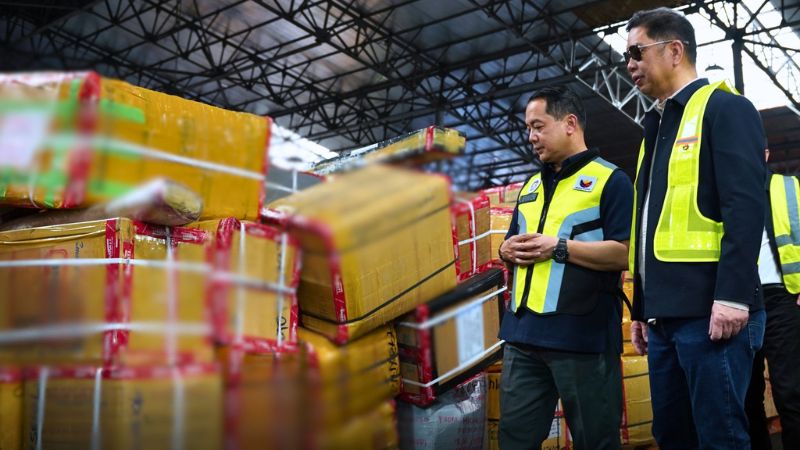
Bureau of Customs officials inspect abandoned balikbayan boxes left at a port in Manila. BOC
Sending a balikbayan box is a long-standing tradition for overseas Filipino workers (OFWs), but cases of abandoned shipments have raised concerns in recent years. Philippine authorities have stepped up enforcement and recovery efforts, but knowing what to do and how to prevent problems remains crucial. Here's what to do if your balikbayan box is abandoned: 1. Report the issue immediately Contact the Bureau of Customs (BOC) as soon as you suspect your shipment is abandoned. BOC-CARES (Customer Assistance and Response Service): • Hotline: +62 (02) 87056000 • Email: boc.cares@customs.gov.ph • Alternative email: bayanibox@customs.gov.ph You can also reach out via the Bureau of Customs PH official Facebook page for updates and inquiry forms. 2. Coordinate with the Department of Migrant Workers If you are an OFW, you may seek assistance from the Department of Migrant Workers (DMW), which works with enforcement agencies to investigate complaints against fraudulent or negligent cargo companies. 3. Prepare complete shipment details Providing accurate information will help speed up the investigation: • Bill of Lading (BL) number and container number • Tracking or invoice number • Name of the cargo company (both overseas consolidator and Philippine deconsolidator) • Shipping date • List of contents 4. Monitor official trackers and updates The BOC regularly releases lists of abandoned containers and updates on shipments being processed for release. Check official channels to track your box. 5. Follow up consistently Cases involving abandoned shipments may take time due to coordination between multiple parties, including ports, customs, and logistics firms. Regular follow-ups with both the BOC and your cargo provider are essential.Your legal protection as a balikbayan box sender
Under Philippine law, cargo companies are responsible for fulfilling delivery obligations. Authorities have filed cases against erring firms under customs and fraud laws. If negligence or fraud is proven, you may pursue legal remedies with the help of government agencies.How to avoid problems with balikbayan box shipments
1. Choose cargo companies with a strong BOC track record The Bureau of Customs regularly publishes a list of accredited cargo companies and deconsolidators with no record of abandoned shipments. Choosing companies from this list significantly reduces the risk of delays or loss. These firms have demonstrated compliance with customs regulations and proper handling of shipments. 2. Prioritise companies with their own deconsolidators A deconsolidator is the Philippine-based logistics partner responsible for receiving, clearing, and delivering balikbayan boxes. Companies that own their deconsolidators offer several advantages: • Full control of operations: They manage the shipment from origin to final delivery • Faster customs clearance: They directly handle duties, taxes, and documentation • Reduced risk of delays: No dependency on third parties
The Bureau of Customs released an official list as of February 2026 of cargo companies and deconsolidators with a good track record of delivering balikbayan boxes. Among those included are UAE-based companies MSM International Cargo LLC and LBC Express, both of which operate their own deconsolidation services in the Philippines.
Having in-house deconsolidators allows these firms to maintain control over the entire delivery process, from shipment consolidation abroad to final delivery in the Philippines, reducing reliance on third-party handlers.
A deconsolidator plays a key role in the logistics chain by receiving bulk shipments at Philippine ports and breaking them down into individual packages for delivery to recipients nationwide. They are also responsible for paying duties, taxes, and port charges to the BOC, ensuring shipments are cleared without delays.
Failure to fulfil these obligations can result in shipments being declared abandoned, a problem that has affected thousands of OFWs in recent years.
Deconsolidators also handle documentation, coordinate inspections, and manage final-mile delivery, making them critical to the efficiency and security of international shipping. The BOC has recently tightened accreditation requirements, including mandatory X-ray inspections of cargo, to combat smuggling and improve accountability.
By contrast, companies that rely on third-party deconsolidators may encounter issues such as:
• Delayed payments to partners
• Failure of the deconsolidator to settle taxes and port charges
• Disputes between logistics partners
• Shipments being declared abandoned and stuck at customs
These breakdowns in coordination are among the most common reasons balikbayan boxes remain undelivered for months or even years.
3. Avoid “too cheap” shipping offers
Unusually low rates can be a red flag. Some operators undercharge customers but fail to pay port fees, taxes, or logistics partners—leading to abandoned shipments. 4. Verify accreditation and reputation Before sending a box: • Check the company against official BOC lists • Look for customer reviews and complaints • Confirm years of operation and physical presence • Ask about their Philippine partner or deconsolidator 5. Keep documentation and receipts Always retain copies of: • Shipping receipts • Tracking numbers • Communication with the cargo company These are essential if you need to file a complaint or legal case. While authorities continue to resolve backlogs and hold erring companies accountable, prevention remains the best approach. Choosing a reliable, accredited cargo provider—especially one with its own deconsolidator—can make the difference between a smooth delivery and a years-long delay. PIA/ICA/Expat MediaFor all the latest news from the UAE and the world, follow us on Facebook, Twitter and Instagram and subscribe to our YouTube page









Comments
Leave a Comment