
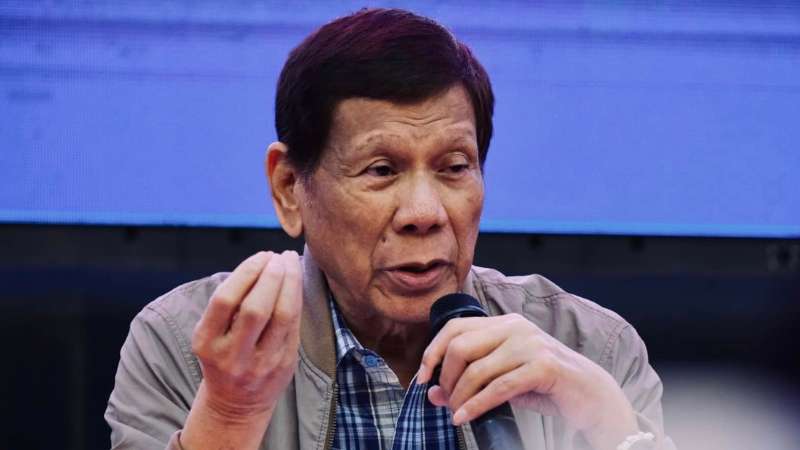
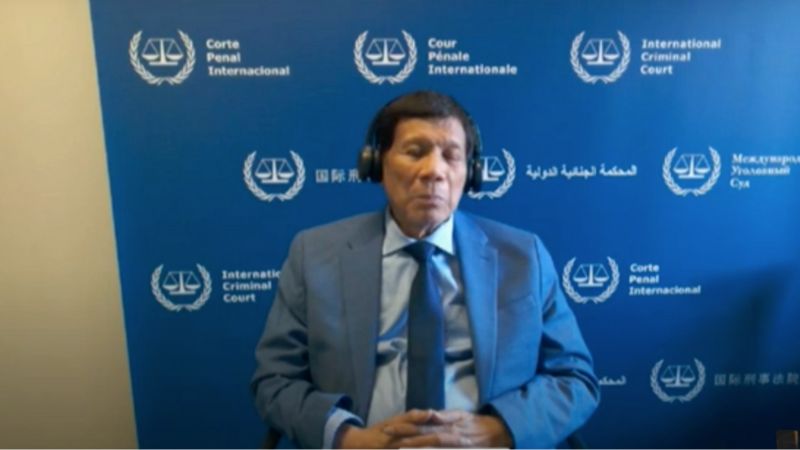
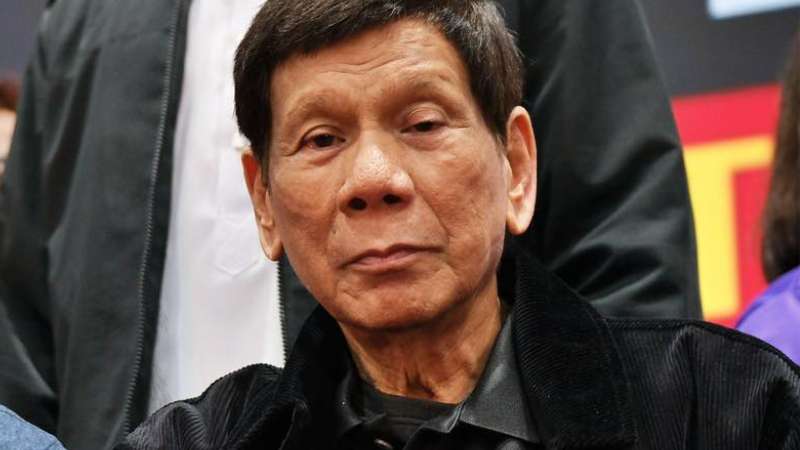
Former Philippine president Rodrigo Duterte. ARCHIVE
An old video of former Philippine president Rodrigo Duterte is making the rounds again online as tensions continue in the Middle East, with many social media users now asking the same question: Did Duterte predict the Iran war? The answer is a bit less dramatic than the viral posts suggest. Duterte did not “predict” the current conflict in the way online claims make it sound. What he did do, back in January 2020, was warn Philippine officials that escalating tensions involving Iran could lead to a wider war and put millions of overseas Filipinos in danger. At the time, his concern was focused on the possible fallout for Overseas Filipino Workers (OFWs) across the region. That warning is what has given the old clip new life in 2026. In the resurfaced clip from a Cabinet meeting in Malacañang, Duterte said: “We do not know what would be the end result of this crisis. It could lead to a protracted war. It could be a widespread strike. Whatever it is, we Filipinos are in grave peril. We have many Filipinos working in the Middle East.” He also said: “Iran seems to be bent on a retaliation, which I think will come. It’s a matter of time.” And in one of the most widely shared parts of the speech, Duterte added: “I have nary a worry, were it not for the fact that there are a lot of Filipinos there and it would take us a huge, gargantuan effort just in case total war breaks out, of how to bring them back safely.” Those comments show that his focus then, as now, was the safety of Filipinos in the region.What was happening in 2020?
The speech came during a very tense moment between the US and Iran. In early January 2020, the US killed Iranian general Qassem Soleimani in a drone strike in Baghdad. Iran later retaliated by launching missiles at US military bases in Iraq. The situation raised fears of a much wider regional conflict. In the days that followed, governments around the world, including the Philippines, began preparing contingency plans for their nationals in the Middle East. Duterte responded by ordering Philippine agencies to prepare for possible evacuation and repatriation operations. Then presidential spokesman Salvador Panelo said the president had directed the creation of a special committee made up of senior officials from defence, interior, national security, foreign affairs and transportation to draw up emergency plans for OFWs in the region. He also ordered the military to prepare air and naval assets if repatriation became necessary. Those steps were linked to the immediate 2020 crisis, not to a detailed forecast of events six years later.Why is the video trending again now?
The clip has resurfaced because the Middle East is once again in a period of dangerous instability, and the Philippines is again dealing with the same issue Duterte highlighted in 2020: how to protect and bring home Filipinos if the situation worsens. The Philippine government has already mounted a fresh wave of repatriation efforts. In the UAE, the latest repatriation flight was scheduled for Thursday (March 26), according to the Filipino Social Club. On March 14, a total of 442 Filipinos from the UAE arrived in Manila on a chartered flight from Fujairah International Airport. They included 200 OFWs, 60 dependents and 182 stranded tourists, according to the Department of Migrant Workers (DMW). The flight was organised by the DMW in coordination with the Philippine Embassy in Abu Dhabi, the Philippine Consulate General in Dubai and the Migrant Workers Offices. Philippine Ambassador to the UAE Alfonso Ver said the mission was carried out under the direct instructions of President Ferdinand Marcos Jr. In Abu Dhabi, 88 distressed tourists and OFWs were transported by bus to join the repatriation effort, while the main contingent was assembled in Dubai. Consul General Ambrosio Brian Enciso said officials had been urging Filipinos to contact embassy and MWO hotlines from the start of the crisis, adding that some requests were received through email, Facebook comments and messages. Another charter flight arrived on March 15 carrying 343 Filipinos from Saudi Arabia and Bahrain, including 328 OFWs and 13 dependents, according to updates on the government’s repatriation drive. The DMW has also said that from March 5 to March 14, a total of 1,315 Filipinos affected by the Middle East crisis had already been assisted under the government’s repatriation programme.So, did Duterte predict the war?
Duterte warned about the risk of a wider Iran-related conflict and the danger it could pose to Filipinos in the Middle East. That warning was grounded in the 2020 crisis after Soleimani’s killing and Iran’s retaliation. It was a strategic concern, not a crystal-ball moment. The reason the clip feels striking today is that the exact humanitarian issue he raised back then, the safety and repatriation of Filipinos overseas, has become urgent again. For many Filipinos, especially OFWs and families with loved ones in the Gulf, the resurfaced video is less about political prophecy and more about a familiar fear: what happens when a regional crisis suddenly puts workers, tourists and families at risk? That is why the clip continues to resonate. It reminds people that whenever tensions rise in the Middle East, Filipinos abroad are often among the first communities to worry about cancelled flights, disrupted work, safety concerns and the need for emergency help. And right now, that concern is no longer theoretical. It is already playing out through repatriation flights, embassy hotlines and advisories, and government efforts across the region. PIA/CAM/ICA/Expat MediaFor all the latest news from the UAE and the world, follow us on Facebook, Twitter and Instagram and subscribe to our YouTube page






Comments
Leave a Comment