
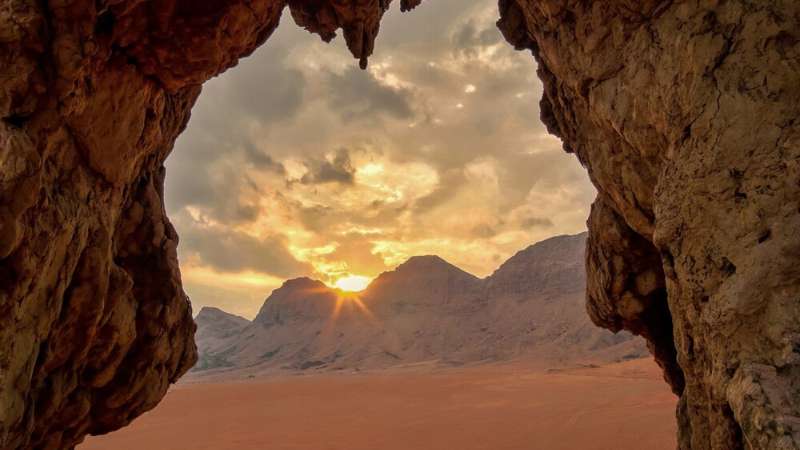
Sharjah’s Faya palaeolandscape. UNESCO
The Faya palaeolandscape in Sharjah, dating back over 210,000 years, has been granted Unesco World Heritage status. The announcement was made during the 47th session of Unesco’s World Heritage Committee in Paris on Friday (July 11), where the Faya site joined the ranks of the world’s most iconic heritage locations, including Egypt’s pyramids, India’s Taj Mahal, and the Great Wall of China. “Faya now belongs to all peoples of the world, just as it did over 200,000 years ago,” said Eisa Yousif, Director General of the Sharjah Archaeology Authority. Here are 5 things you didn’t know about the new Unesco World Heritage site.It’s older than the pyramids.
While Egypt’s pyramids date back about 4,500 years, Faya’s human history stretches over 210,000 years. That’s prehistoric royalty right there.It could rewrite human migration history.
Faya challenges the idea that early humans only passed through Arabia. The site shows people may have actually settled here, adapting to desert life long before we thought possible. Read moreFaya has 18 archaeological layers.
Each layer represents a different wave of human occupation, making it a living timeline of human evolution in one spot.Tools tell the story.
The handmade stone tools found at Faya aren’t just relics—they’re clues to how early humans hunted, survived, and thrived in the desert.It’s a world heritage first for Sharjah.
Faya is Sharjah’s first Unesco World Heritage Site and only the second in the UAE, after Al Ain. A major milestone for the emirate! CAM/Expat MediaFor all the latest news from the UAE and the world, follow us on Facebook, Twitter and Instagram and subscribe to our YouTube page











Comments
Leave a Comment