
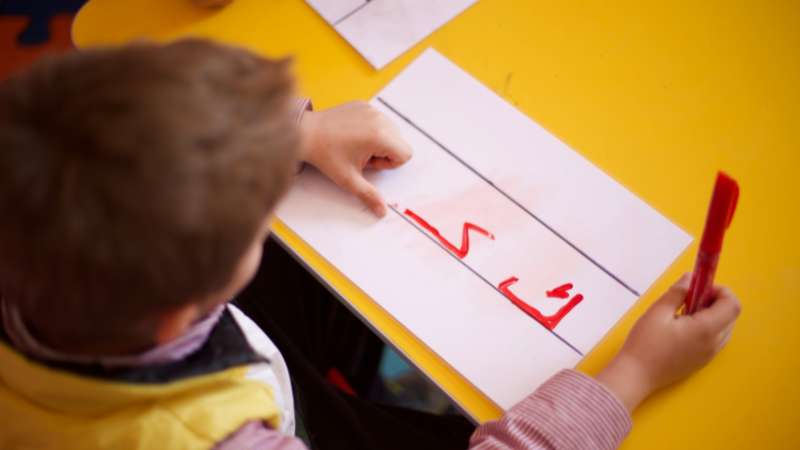
Picture for illustrative purposes only. ARCHIVE
Dubai’s Knowledge and Human Development Authority (KHDA) announced on Friday (February 21) a groundbreaking policy requiring Arabic language education for children from birth to six years in all private schools and early childhood centers. The initiative, set to take effect in September 2025, aims to strengthen Arabic proficiency and cultural pride among young learners. According to KHDA, the policy will be rolled out in phases. The first phase, beginning in September 2025, will cover children aged four to six years. Subsequent phases will extend to younger age groups, ensuring Arabic language exposure from infancy. "Arabic is at the heart of the UAE’s cultural identity. It is essential that we instill a love for the language in all our children from the earliest stages of their education," said Fatma Belrehif, CEO of the Education Quality Assurance Agency at KHDA. The new framework emphasizes a play-based, inquiry-driven approach to Arabic teaching, ensuring an engaging and interactive learning experience for both native and non-native Arabic speakers. Under the policy, at least one-third of children’s instructional time must include the presence of an Arabic teacher, who will facilitate language development through culturally relevant activities. Schools must also ensure that Arabic educators have appropriate qualifications and receive continuous professional development. KHDA highlighted the role of parents in reinforcing language learning at home. "Parents must be encouraged to support their children’s Arabic education through everyday interactions and accessible resources," the authority stated. The initiative is part of "Loughat Al Daad," one of 28 game changers under Dubai’s Education 33 strategy, which aims to modernize and enhance the UAE’s education system. "Our goal is not just for Emirati and Arabic-speaking children to embrace the language as their mother tongue, but for non-native speakers to experience the richness of the UAE’s culture and heritage from an early age," Belrehif explained. In addition to this new policy, KHDA has updated requirements for national mandatory subjects in private schools, including Arabic, Islamic Education, Social Studies, and Moral Education, with increased instructional time and curriculum enhancements. "This initiative ensures that all children in Dubai, regardless of background, develop a strong connection to the language and culture of the UAE as they grow into global citizens," Belrehif added. ICA/Expat MediaFor all the latest news from the UAE and the world, follow us on Facebook, Twitter and Instagram and subscribe to our YouTube page












Comments
Leave a Comment