
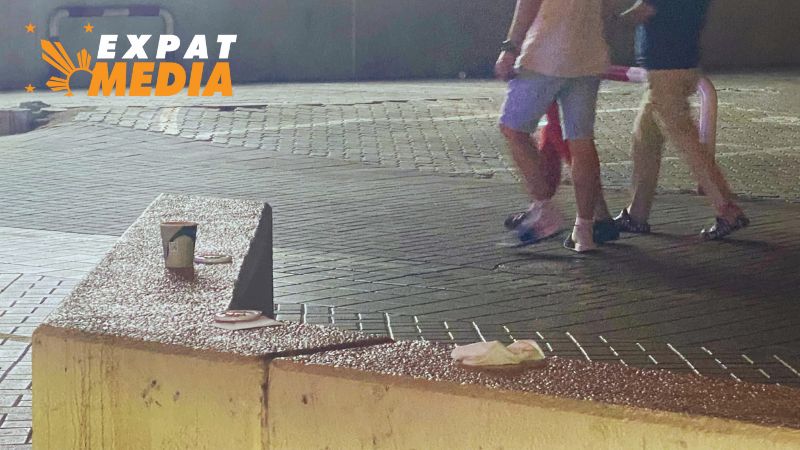
An empty paper cup and plastic wrapper left behind in Al Muraqqabat, Dubai. EXPAT MEDIA
On a busy street in Al Muraqqabat, two people finish a roadside snack and walk away — leaving behind an empty paper cup and plastic wrapper. Within minutes, the litter blends into the pavement, joining dozens of similar remnants left by others. Scenes like this are increasingly common in parts of Al Muraqqabat and Al Rigga, particularly near cafeterias. Public benches become quick dining spots, but the trash often stays long after the people have left. Dubai Municipality, which oversees the city’s world-class cleanliness, has strict anti-littering laws — with fines starting at Dh500 for throwing waste in public and going up to Dh100,000 for severe violations. Spitting is also banned, attracting a Dh500 fine, which doubles if paan is involved. Even dripping air conditioner water onto pavements or hanging laundry in balconies and rooftops can result in a Dh500 fine. Despite the rules, the city deploys an army of over 3,200 municipal cleaners to maintain its spotless reputation. In fact, Dubai has topped the Global Power City Index for cleanliness for five consecutive years, achieving 100 percent satisfaction in cleanliness surveys. Yet officials stress that laws and cleaners alone aren’t enough. “Dubai’s consistent leadership in global rankings is driven by its vision to become the world’s best city to live and work,” said Marwan bin Ghalita, Director General of Dubai Municipality in a previous interview. “But this requires the cooperation of everyone who calls Dubai home.” For residents and visitors, that means enjoying a roadside cup of chai — and taking the cup with you when you leave. After all, a cleaner Dubai starts with one less piece of litter on the ground. ICA/Expat MediaFor all the latest news from the UAE and the world, follow us on Facebook, Twitter and Instagram and subscribe to our YouTube page









Comments
Leave a Comment