
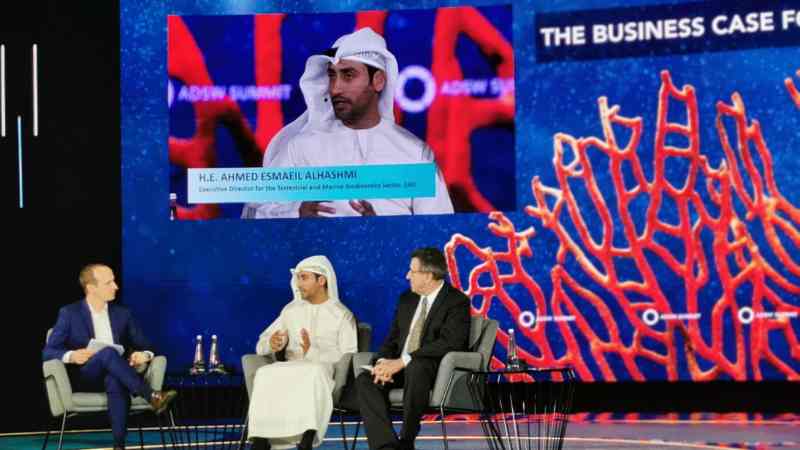
Photo for illustrative purposes only. SUPPLIED
EAD reveals how Abu Dhabi balances economic development and biodiversity
Ahmed Al Hashmi, Executive Director of the Terrestrial and Marine Biodiversity Sector of the Environment Agency – Abu Dhabi (EAD), has shed light on how Abu Dhabi strikes the perfect balance between economic development and conservation of biodiversity. Hashmi also explained how EAD played an essential role in ensuring that businesses and infrastructure projects were planned with the environment in mind to avoid harming any local species. He shared his thoughts during an in-conversation session under "The Business Case for Biodiversity." The event was held at the Abu Dhabi Sustainability Week (ADSW) Summit on January 17th at Abu Dhabi National Exhibition Centre (ADNEC). Also present was Prof. Carlos Manuel Duarte, a distinguished Professor of Marine Science at King Abdullah University for Science and Technology (KAUST) in Saudi Arabia, in a session moderated by Mr. Adrien Portafaix of the Boston Consulting Group. Al Hashmi said during the panel: "Abu Dhabi has a different development model. A model built around appreciation for nature and commitment to protecting it is why our economic development plans integrate environmental conservation considerations. Much of this was rooted in the late Sheikh Zayed's conservation philosophy and a continuation of that legacy by successive leadership. His conservation legacy endures, with an even greater push towards creating a society based on the fundamentals of sustainable economic development, and environmental conservation, while maintaining traditions and culture." He added: "Businesses can not only succeed but also thrive only if they carefully integrate biodiversity and environmental conservation into their operations and management frameworks. This will only happen when they start believing in the value of natural resources, not only in the operational stages of their business, but during the planning and actual construction phases. They must assess the impact of their planned development, in terms of altering or destroying the natural resources, and then take corrective measures by adopting environment friendly designs, materials, and practices." He then elaborated on EAD's role: "As a regulator in Abu Dhabi, we ensure that all development projects go through the necessary Environmental Impact Assessments (EIAs) before approval." Regarding the use of technology for the conservation of biodiversity, he discussed EAD's pioneering role. He said: "We monitor our biodiversity using the most advanced tools and technologies available. We have been one of the leaders globally, in the use of satellite telemetry technology, to track long-distance migratory species, particularly birds." He concluded: "Our efforts to protect our soil, water, air, and biodiversity resources are not just helping us achieve our mandate to protect and improve our biodiversity and our environment but is helping us create a safe and healthy environment for our residents. A place where they can breathe fresh air, enjoy clean beaches, kayak in the mangroves, hike in the mountains and explore the natural beauty of our desert landscapes. More importantly, it is allowing them to connect with nature." Abu Dhabi Sustainability Week is held under the patronage of UAE President, His Highness Sheikh Mohammed bin Zayed Al Nahyan. It is dedicated to setting the sustainability agenda ahead of COP28, the UAE Climate Conference being held at the end of this year at Expo City in Dubai. Under the theme of 'United on Climate Action Toward COP28,' ADSW established the UAE leadership's commitment to practical and inclusive climate action and took place from Saturday, January 14th, to Thursday, January 19th. PR/ Expat MediaFor all the latest news from the UAE and the world, follow us on Facebook, Twitter and Instagram and subscribe to our YouTube page









Comments
Leave a Comment