
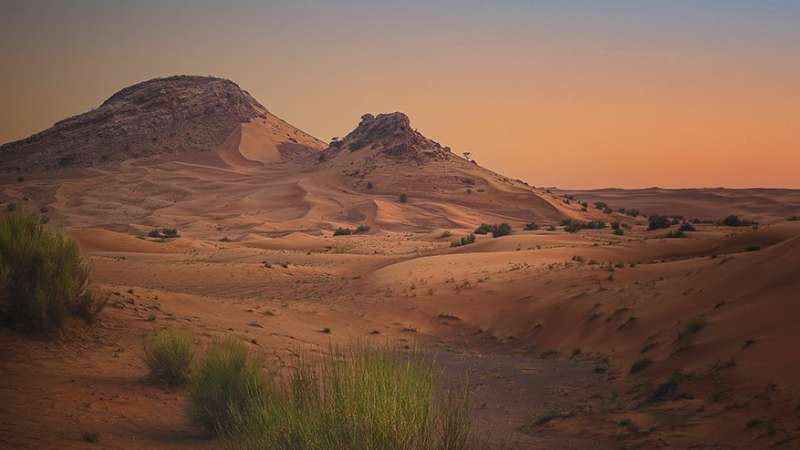
Faya palaeolandscape in Sharjah. SHEIKH SULTAN BIN AHMED AL QASIMI
The quiet dunes of central Sharjah have just made global headlines as the Faya palaeolandscape—a place that’s been keeping secrets for more than 210,000 years—was officially added to the Unesco World Heritage List. This peaceful stretch of desert has now joined the ranks of the Taj Mahal, the Great Wall of China, and Egypt’s pyramids as one of humanity’s most precious places. So, what’s the big deal about Faya? For one, it’s old. Really old. Scientists have found evidence here of uninterrupted human occupation going back over 200,000 years. That makes it one of the oldest archaeological landscapes on Earth. And while it may just look like sun-bleached limestone hills and golden sand dunes to the untrained eye, it’s actually a living time capsule of early human innovation. “As one of the most important archaeological sites around the world, Faya palaeolandscape is a living testament to humanity's early presence in this region,” said Sheikha Bodour bint Sultan Al Qasimi, who led the Unesco nomination. From tentative to timeless The Unesco honor was announced in Paris during the 47th session of the World Heritage Committee. It’s only the second UAE site to make the prestigious list (the other is Al Ain’s cultural oasis), but certainly one of the most exciting. The work to get Faya on the map didn’t happen overnight. In fact, teams of archaeologists have been digging, dusting, and documenting this site for over 30 years. They’ve uncovered 18 distinct layers, each representing a different chapter in early human life. Among the finds: stone tools, fossilized remains, and clues that people might have actually lived here—not just passed through. “The stone tools found at Faya are testimony to the ingenuity of our ancestors,” Sheikha Bodour added, calling it proof of “deep cultural roots” in the region. Here’s the twist: Faya might just change what we thought we knew about how humans left Africa. Instead of zipping through the Arabian Peninsula as a migratory highway, early humans may have settled in places like Faya, adapting to shifting climates and turning the desert into home. “Faya now belongs to all peoples of the world, just as it did over 200,000 years ago,” said Eisa Yousif, Director General of the Sharjah Archaeology Authority. What’s next for Faya? Now that Faya is on the world stage, expect to hear a lot more about it. The UAE has a conservation and visitor plan that runs until 2030, making it not just a protected site, but one that welcomes curious travelers and researchers alike. So, next time you’re road-tripping through Sharjah, take a moment to stop and look around. Beneath your feet could be remnants of the earliest humans to call this desert home. Who knows? You might just be walking in ancient footsteps. PIA/Expat MediaFor all the latest news from the UAE and the world, follow us on Facebook, Twitter and Instagram and subscribe to our YouTube page












Comments
Leave a Comment