
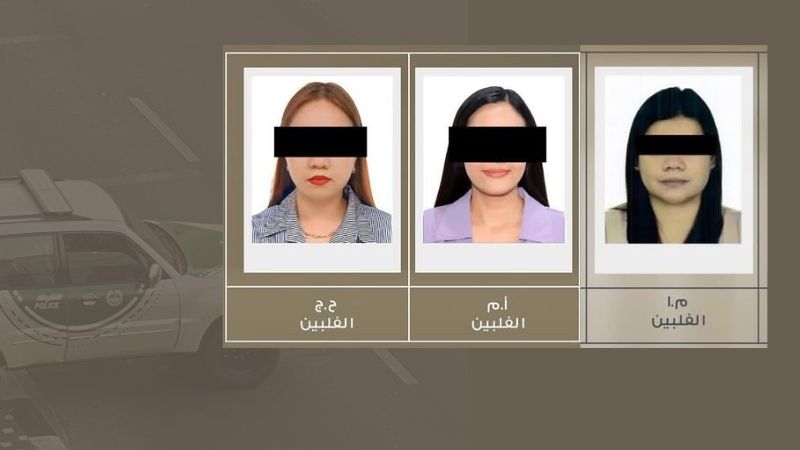
The three Filipina suspects arrested in UAE. UAE PUBLIC PROSECUTION
The Philippine government has pledged legal support to three Filipina overseas Filipino workers (OFWs) arrested in the UAE over alleged violations involving videos of missile-related incidents. Philippine Department of Migrant Workers (DMW) Secretary Hans Leo Cacdac said on Tuesday (March 17) that authorities have already assigned a lawyer and are working closely with the Philippine Embassy in the UAE to assist the three women. “We are working closely with Ambassador Alfonso Ferdinand Ver and the Philippine Embassy in the UAE to provide legal and other forms of assistance,” Cacdac said during a press briefing in Manila. He confirmed that all three are UAE residents and are currently under detention, with two arrested in Abu Dhabi and one in Dubai. A retained lawyer has been tasked to locate and visit them to begin legal representation. “I can’t give details on the legal courses of action, but rest assured, we have a lawyer assigned… and that lawyer has been tasked to see them wherever they are currently detained,” Cacdac said. The DMW is also coordinating with the families of the OFWs in the Philippines to provide updates and support. The arrests come amid a wider crackdown by UAE authorities on the spread of sensitive or misleading content online, particularly during heightened regional tensions involving missile and drone activity. On March 14, a Filipina was among 10 individuals arrested for publishing sensitive incident videos, including manipulated clips generated using artificial intelligence. The following day, two more Filipinas were included in a group of 25 people detained for similar violations, according to UAE authorities. Officials said the arrests stem from alleged breaches of UAE security regulations, particularly involving the filming and sharing of videos related to ongoing incidents. Authorities found that some individuals circulated real footage of missile interceptions but added misleading commentary or effects, while others created fabricated clips showing explosions or attacks in the UAE. Some content reportedly reused footage from incidents outside the country and falsely presented them as local events, while other posts were described as promoting narratives that could undermine national security or glorify hostile actions. UAE authorities warned that publishing such material, whether real or altered, can pose risks to public safety by spreading fear or misinformation. “The publication of these clips, whether real or fabricated, would affect public security and provoke panic among members of the community,” authorities said. Under UAE law, those found guilty of spreading misleading information that affects public safety could face at least one year in prison and fines starting from Dh100,000. Attorney-General Dr. Hamad Saif Al Shamsi said authorities are closely monitoring digital platforms and will take firm action against violators. “Anyone who proves to be involved in such acts will be subject to immediate criminal accountability,” he said. The arrests follow repeated warnings from UAE authorities urging residents not to film or share videos of sensitive locations or incidents. Officials have stressed that such actions could interfere with emergency responses and give a misleading impression of the situation in the country. Dubai Police previously sent SMS alerts reminding residents that sharing unverified or sensitive content online could result in legal consequences and compromise national security. The UAE Cybersecurity Council has also urged the public to verify information and rely only on official sources. Meanwhile, Cacdac reiterated the Philippine government’s advisory for Filipinos in the UAE to strictly follow local laws, especially regarding online activity. “First and foremost, we continue to exercise caution, advising our fellow citizens to please abide by host country protocols and security regulations,” he said. “In this case, posting of documentations or videos of attacks is prohibited. So, please refrain or do not video nor post such images.” CAM/ICA/Expat MediaFor all the latest news from the UAE and the world, follow us on Facebook, Twitter and Instagram and subscribe to our YouTube page




Comments
Leave a Comment