
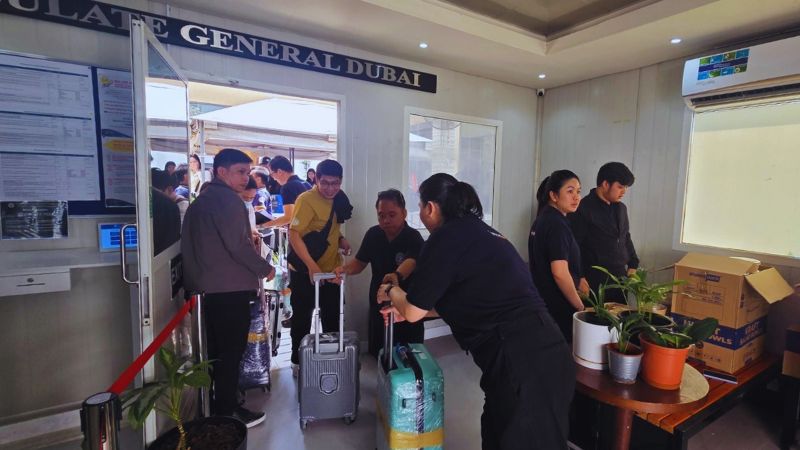
During the recent repatriation of Filipinos in the UAE. Philippine Consulate General Dubai
Are you a Filipino who needs to return home from the UAE? Here’s a Q&A guide on who can apply for repatriation, required documents, how to contact the Migrant Workers Office in Dubai, Philippine Embassy in Abu Dhabi or the Philippine Consulate General and what assistance is provided.Who can apply for repatriation?
Overseas Filipino Workers (OFWs), their dependents, stranded tourists, distressed Filipinos, or anyone facing humanitarian concerns.Are repatriation flights free?
Yes. Current repatriation flights are fully shouldered by the Department of Migrant Workers.What documents do I need?
• Valid passport or travel document (minimum 6 months validity) • Active employment visa for OFWs (or cancelled visa if leaving permanently) • Fit-to-travel certificate for those with medical conditions or pregnancy • No pending legal cases or travel bansHow do I apply?
• MWO Dubai (Assistance to Nationals / ATN): Hotlines: 056 3535558 | 054 2230822 | 056 1533057 Email: atn.mwodubai@dmw.gov.ph | repat.mwodubai@gmail.com • OWWA Dubai: Hotline: 0505585536 Email: dubai@owwa.gov.ph • Philippine Embassy Abu Dhabi (for those located in Abu Dhabi or Al Ain): +971 50 443 8003 • Philippine Consulate General Dubai (for those located in Dubai and northern emirates): +971 56 501 5756What support is provided during repatriation?
• Transportation to the airport • Airport assistance and check-in • Meals, water, and snacks • Medical check-up if required • Hotel accommodation if needed • Financial aid for distressed OFWsHow long does it take to join a repatriation flight?
Timing depends on requests, flight availability, and urgency. Authorities prioritize OFWs in high-risk areas, those with medical conditions, or other humanitarian concerns.Can tourists apply if flights are canceled?
Yes. Distressed tourists can contact the Philippine Embassy, Philippine Consulate, or MWO through hotlines or email to be included in repatriation flights.Any tips for contacting authorities?
Authorities recommend reaching out early and repeatedly if necessary, via hotlines, emails, or even social media messages. Follow-up helps ensure inclusion in repatriation programs.Repatriation explained
The word “repatriation” often appears in news reports whenever crises erupt abroad, especially when governments advise their citizens to return home. In simple terms, repatriation means helping a citizen return safely to their home country from abroad, usually during emergencies, conflicts, disasters, or serious personal situations. For overseas workers, repatriation can involve coordination between several government agencies, embassies, employers, and sometimes airlines. Governments may assist citizens through their embassies or consulates, particularly if they are in distress or caught in a crisis such as war, natural disasters, or major political unrest. For Filipino migrant workers, the repatriation process is typically coordinated by the Department of Migrant Workers along with the Department of Foreign Affairs Philippines. Embassies, migrant worker offices, and labor attachés help with documentation, travel coordination, and emergency support. Who usually pays for the flight While many assume repatriation automatically means a free flight provided by the government, that is not always the case. In many cases, the first party responsible for the cost of repatriation is the employer. This obligation is often written into employment contracts or required under labor regulations that govern overseas workers. If the employer cannot shoulder the cost — for example, if a company closes or abandons a worker — the government may step in and provide assistance. Some governments, such as the Philippine government, maintain emergency funds to pay for repatriation flights to support distressed nationals who cannot afford the journey home. Government-funded repatriation usually happens in exceptional circumstances, such as armed conflict or war zones; large-scale evacuations; natural disasters; workers who have been abandoned by employers, and victims of trafficking or abuse. During these situations, authorities may arrange evacuation flights or group repatriation programs. Even then, assistance can vary depending on available funds and the scale of the crisis. Assistance beyond the plane ticket Repatriation assistance may include more than just airfare. Embassies may help workers with exit permits or immigration clearance; temporary shelter; food and emergency cash assistance; transportation to the airport and coordination with families back home In some cases, governments also provide reintegration programs to help returning workers find employment or start small businesses after returning home. Why repatriation can be misunderstood While some high-profile evacuations involve fully funded charter flights, these are usually special cases rather than the standard rule. For many overseas workers, repatriation is a coordinated process that may still involve personal expenses or employer responsibilities. Understanding how it works helps set realistic expectations, particularly during times of regional tension or global emergencies. CAM/PIA/ICA/Expat MediaFor all the latest news from the UAE and the world, follow us on Facebook, Twitter and Instagram and subscribe to our YouTube page











Comments
Leave a Comment