
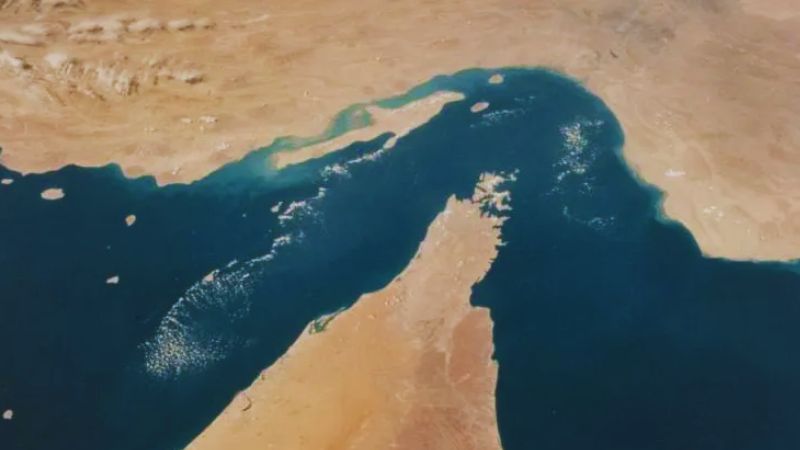
The Strait of Hormuz. ARCHIVE
Iran’s parliament is drafting a law that would require vessels to pay a fee for safe passage through the Strait of Hormuz, according to Iran's semi-official Fars news agency. Fars, citing an unnamed lawmaker, reported that the proposal could be finalised next week and would formally establish Iran’s oversight of the strategic waterway. The Strait of Hormuz, a critical global shipping route, has been largely disrupted since joint US and Israeli strikes on Iran on February 28. The channel connects major oil and gas producers in the Arabian Gulf to global markets, with around 20 percent of the world’s seaborne oil and liquefied natural gas trade passing through it before the conflict. Shipping activity has slowed to a near standstill in recent weeks, with only a limited number of vessels, mostly linked to Iran or China, managing to pass through. Some ships reportedly secured safe passage through arrangements with Iran’s Islamic Revolutionary Guard Corps. The disruption has triggered concerns across Asia, where several countries depend heavily on fuel shipments through the strait. The Philippines has declared a “national energy emergency,” saying its fuel reserves could last for about 45 days. Taiwan said it has around 11 days of liquefied natural gas reserves, while Bangladesh estimates its fuel supply may last between nine and 14 days. Governments across the region have introduced emergency measures to manage fuel shortages and rising prices. These include sourcing energy from alternative suppliers, switching to lower-grade fuel, and reducing consumption. India has expanded its list of energy import partners from 27 to 41 countries. Bangladesh has increased diesel imports, while the Philippines has allowed limited use of lower-quality “Euro 2” fuel. Japan has called for coordinated global action. Prime Minister Sanae Takaichi, in a meeting with International Energy Agency head Fatih Birol, urged the release of oil reserves to stabilise prices. Birol said member countries agreed to release 400 million barrels of strategic oil, the largest such move in the agency’s history. Some countries are also considering demand-reduction measures similar to those used during the Covid-19 pandemic. Pakistan announced a four-day workweek for government offices and temporary school closures, while Bangladesh moved forward university holidays to conserve energy. Indonesia, Vietnam, and Thailand are also exploring remote work arrangements. The conflict has continued to escalate, with more than 1,300 people reported killed since late February. Iran has launched retaliatory drone and missile attacks targeting Israel and Gulf locations hosting US military assets. CAM/ICA/Expat MediaFor all the latest news from the UAE and the world, follow us on Facebook, Twitter and Instagram and subscribe to our YouTube page









Comments
Leave a Comment