
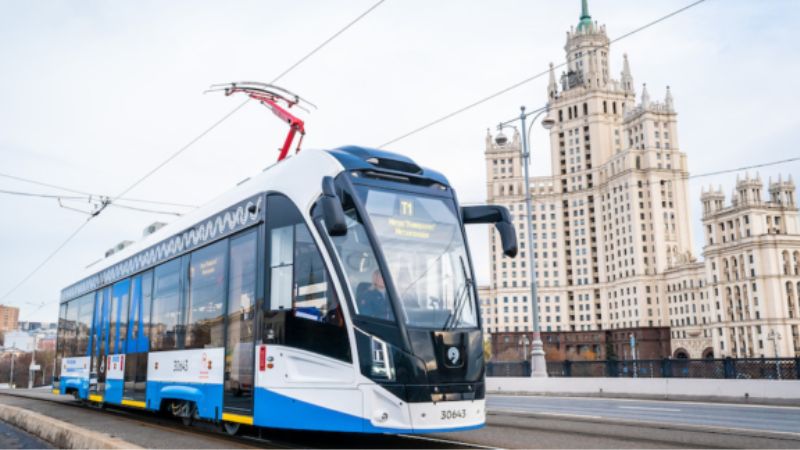
Moscow's new T2 tram line runs from Chertanovskaya metro station to Novogireevo station. MOSCOW DEPARTMENT OF TRANSPORT
Moscow has launched what officials describe as the world’s longest urban tram route, marking a major milestone in the city’s public transport system. Mayor Sergei Sobyanin inaugurated the new T2 tram line, which stretches 33 kilometres across the Russian capital. According to the Moscow Department of Transport, the route runs from Chertanovskaya metro station to Novogireevo station on the Moscow Central Diameter Line 4. It connects 13 districts and is expected to improve access for more than two million residents. The line features 79 stops, with trams running at six-minute intervals. A full journey takes more than two hours. Officials described the system as operating to “surface metro” standards, designed to integrate seamlessly with the wider transport network, including connections to the Moscow Metro. Modern tram units, including single-section “Lyovyonok-Moscow” and three-section “Vityaz-Moscow” vehicles, are deployed on the route. Authorities said the new line is expected to ease congestion and improve daily commuting across densely populated districts.How it compares to Dubai Tram
While Moscow’s new route sets a global benchmark in scale, Dubai’s tram system offers a different model focused on high-density urban connectivity. The Dubai Tram currently spans 10.6 kilometres, running through key areas such as Dubai Marina, Jumeirah Beach Residence, Media City, and Al Sufouh. Launched in 2014, the Dubai Tram features 11 stations and connects with the Dubai Metro at Sobha Realty and DAMAC Properties stations. A full journey on the Dubai Tram takes around 40 to 42 minutes, significantly shorter than Moscow’s two-hour cross-city route. One of its standout features is its catenary-free system, using ground-level power supply instead of overhead cables, making it one of the most technologically advanced tram systems in the region. The network operates daily from 5:30am to 1am, with frequent services during peak hours. It uses Alstom Citadis trams, offering air-conditioned cabins, Gold Class seating, and dedicated spaces for women and children. Future expansion plans aim to extend the Dubai Tram network to nearly 15 kilometres. Moscow’s 33km tram route highlights the growing role of trams in large-scale urban mobility, functioning almost like a metro system on the surface. In contrast, Dubai’s tram network focuses on efficient, comfortable travel within high-traffic lifestyle districts, complementing the wider Metro system. ICA/Expat MediaFor all the latest news from the UAE and the world, follow us on Facebook, Twitter and Instagram and subscribe to our YouTube page










Comments
Leave a Comment