
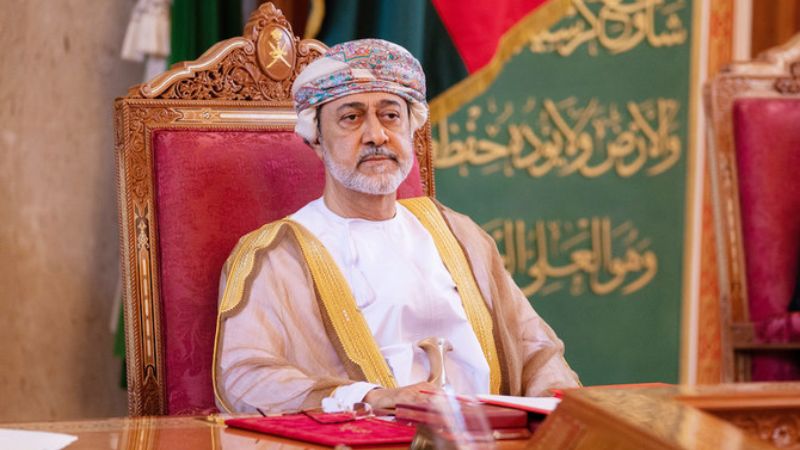
Oman's Sultan Haitham bin Tariq. ARCHIVE
Oman will introduce a personal income tax for the first time starting January 1, 2028, targeting high-income earners in a move to strengthen fiscal sustainability and support Oman Vision 2040. The 5 percent personal income tax will apply to individuals earning more than 42,000 Omani rials annually (equivalent to Dh401,156.20 per year or Dh33,429 per month). According to Oman’s Tax Authority, 99 percent of the population is expected to remain unaffected due to the high income threshold. The tax, enacted under a Royal Decree, marks a historic first for Oman and the broader Gulf Cooperation Council (GCC), which has traditionally remained income-tax-free. Authorities emphasized that tax evasion by high earners will be met with jail time and hefty fines, underscoring the government’s commitment to fiscal accountability. The law also provides 16 categories of income that are exempt from personal income tax. These include: • Salaries of diplomatic mission members • Living allowances for Omani residents in diplomatic missions • Salaries earned abroad by Omani tax residents • Contributions to pension schemes • Educational and healthcare expenses within set regulations • Income from declared primary residences • Lifetime exemption for sale of a secondary residence • Zakat and charitable donations (up to 5% of gross income) • Investment returns from government-issued instruments • Compensation payments (non-salary) • Inheritance, gifts between close relatives • Interest from housing loans and Islamic financing (once, lifetime) • Income from patents and industrial property (first 5 years) The introduction of personal income tax is part of Oman’s broader tax reform strategy to diversify its economy and reduce dependence on oil revenues.Will UAE follow suit?
Oman is the first GCC country to introduce personal income tax, setting a precedent that could reshape the tax landscape in the region over the next few years. The new tax is part of Oman’s broader strategy to diversify its revenue sources and reduce its long-term dependence on oil and gas. Although the initial tax rate will be modest—especially compared to countries like the UK where income tax can reach up to 45 percent—the move is seen as a significant policy shift in the Gulf and raises questions whether or not other GCC countries like the UAE may follow suit. Currently, the UAE imposes no personal income tax, maintaining its appeal as a tax-free haven for residents. However, the country does have a 5 percent Value Added Tax (VAT) on goods and services and introduced corporate tax in recent years. Meanwhile, financial experts say Oman’s decision may open the door for similar reforms across the Gulf. “I think it’s inevitable that other states will follow Oman. I’m sure none of them wanted to be first,” said David Denton, a tax expert from wealth management firm Quilter Cheviot. “While I don’t think the rate will be significant to begin with, these things are all gradual.” Denton pointed to how Gulf countries have already transitioned to corporate taxes and VAT. “Taxes on personal income are one of the last things you bring in, but this is all part of a shift away from relying on natural resources, which are volatile,” he added. Despite rising speculation, the UAE has firmly denied plans to follow Oman’s lead. In a January interview at the World Economic Forum in Davos, UAE Economy Minister Abdulla bin Touq Al Marri dismissed any discussions about introducing income tax in the emirates. “There’s a lot of speculation on that,” Al Marri said. “It’s not on the table. It’s not in the rooms of discussions. It’s not being discussed in the meetings. It’s not coming anytime soon.” ICA/Expat MediaFor all the latest news from the UAE and the world, follow us on Facebook, Twitter and Instagram and subscribe to our YouTube page












Comments
Leave a Comment