
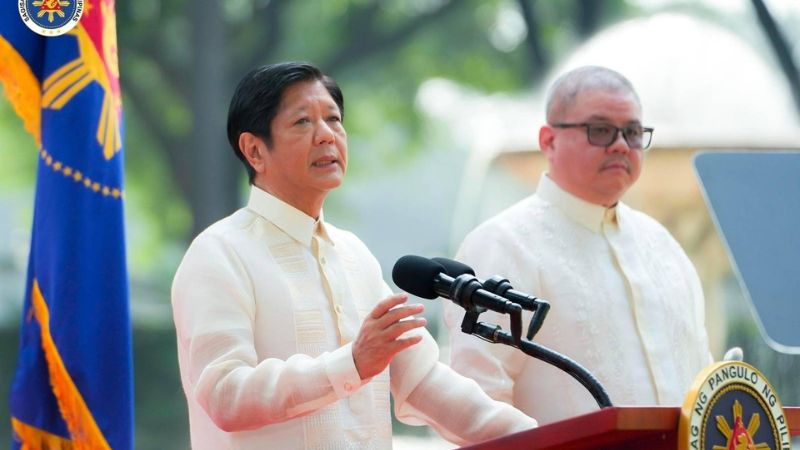
Philippine President Bongbong Marcos. ARCHIVE
The Philippines has seen countless corruption scandals but the Zaldy Co’s recent revelations have triggered something different: a direct accusation against a sitting President, the kind that forces the nation to confront how power is wielded behind closed doors. Co’s videos—released while he remains overseas—do not merely point fingers; they narrate, in detail, the mechanics of inserting ₱100 billion into the national budget, implicating President Bongbong Marcos Jr., former Speaker Martin Romualdez, Budget Secretary Amenah Pangandaman, and key Palace officials. If true, they redraw the map of accountability in the Philippines. If false, they mark one of the most calculated political offensives in recent memory. Either way, the public is now forced to read between the lines. Whether one believes Co or not, one fact is undeniable: his narrative has shifted the center of gravity. For the first time since he assumed office, Marcos now faces allegations that directly implicate him at the heart of a multibillion-peso scandal. And unlike typical political mudslinging, this one comes with names, dates, locations and a brown leather bag that may go down as a symbol of the year’s biggest political controversy.Why these allegations hit differently
Co was not an outsider throwing stones. He was a budget powerbroker, a contractor, and a confidant to the very political figures he now accuses. His claims strike at the core of how budgets are allegedly negotiated in Philippine politics through presidential blessing, quid pro quos, and silent understandings about which department gets padded and who releases the “unprogrammed funds.” His assertion that he was told to “stay out of the country,” supposedly to be used as a convenient scapegoat, adds tension to an already combustible narrative. The bicameral conference committee, or “bicam,” is the final battlefield for budget changes; often criticized for being opaque. For Co to allege that Marcos himself dictated insertions, confirmed by officials, and carried in a “brown leather bag,” paints a picture of a system where rules matter less than relationships. This is not about one official. This is about how governance has long been conducted, and who benefits. Co’s video statements did more than expose alleged corruption—they cracked open a political fault line that Malacañang can no longer ignore.What this means for Marcos
For the Philippine president, the danger isn’t just the accusation, it’s the precedent. If a major congressional ally turns publicly against him, what stops others from doing the same? Philippine politics is built on alliances of convenience, and convenience evaporates quickly in crisis. Marcos has chosen to dismiss Co’s testimony with: “I don’t want to even dignify what he is saying.” But silence is not strategy. Not when the public is already angry over flood control scandals, not when civic groups are mobilizing mass protests, and not when impeachment is being openly discussed by labor leaders and civil society. Marcos cannot simply brush this off. While, the Palace dismissed the videos as hearsay, the public reaction shows people are no longer satisfied with blanket denials. A president embroiled in a corruption narrative risks shrinking political capital, wavering support among allies, growing pressure from civil society, and a potential constitutional crisis if impeachment is pursued. The fact that protests like the Trillion Peso March are growing reflects a nation approaching breaking point.What this means for Romualdez
If Co is telling the truth, presidential ally Romualdez is equally vulnerable. The alleged promise he supposedly made to the president about the P50-billion insertion adds a new dimension to an already strained political relationship. This could reshape the House’s internal power dynamics and test loyalties that were once assumed to be unshakeable.What about Filipinos in UAE?
Filipinos abroad—especially in the UAE—are watching closely. Many send taxes, remittances, and investments home. Their biggest question is simple: “Where is our money going?” OFWs often endure long hours and separation from family so that their hard-earned money helps build a better future back home. Learning that billions may have been manipulated or misused hits a raw nerve. In community pages across Dubai, Abu Dhabi, and Sharjah and beyond, discussions have already erupted. Filipinos here are demanding transparency—not because they are political, but because they have a stake in every peso misused.What happens next?
The path ahead is unpredictable, but several possibilities are emerging: • Marcos survives politically but emerges weaker, with a fractured coalition. • More whistleblowers may surface. Co has broken the dam; others may follow. • Congress may be forced into open hearings. A full-scale investigation is triggered, forcing testimony under oath from Co and implicated officials. • The Trillion Peso March could grow. Public anger is expanding beyond partisan lines. • Calls for impeachment may solidify. The crisis accelerates public dissent, particularly as economic pressures mount. In the end, this scandal could define the Marcos presidency. Not because of the accusations alone, but because of how he chooses to respond or refuses to. And regardless of the outcome, this moment signals a turning point. True or not, Co’s revelations have exposed a system the public already suspects: that corruption is not incidental but structural, baked into decision-making. The Filipino people, at home and abroad, now await clarity. And clarity, at this point, may only come in the form of courage from those inside the halls of power who choose truth over silence.For all the latest news from the UAE and the world, follow us on Facebook, Twitter and Instagram and subscribe to our YouTube page








Comments
Leave a Comment