
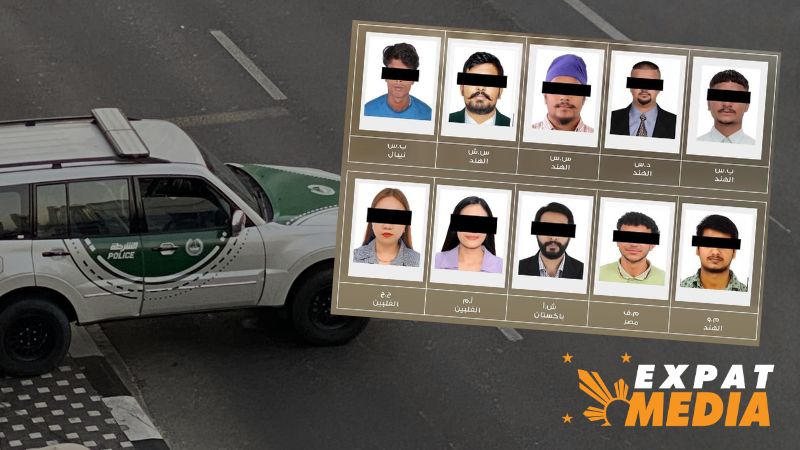
Mugshots of people arrested in the UAE over sensitive videos. EXPAT MEDIA/UAE PUBLIC PROSECUTION
If you’ve been wondering why authorities in the UAE and the wider Gulf region are arresting people for posting videos of Iran-related attacks, the short explanation is this: officials say these clips can do more than just go viral. They can reveal sensitive security information, spread false claims, and trigger public panic. The UAE has stepped up enforcement after a wave of real and fake videos circulated online during recent regional tensions. Authorities say the issue is not simply about stopping gossip. It is about protecting national security, public order and emergency response operations. UAE Attorney-General Dr. Hamad Saif Al Shamsi said the arrests followed close monitoring of digital platforms to stop the spread of fabricated and misleading material. He warned that exploiting cyberspace to publish content that harms public security or misrepresents the UAE’s defensive capabilities is a criminal offence. “Any individual proven to be involved in these acts will be referred to the judiciary to receive the prescribed legal penalty,” he said.So what exactly is the problem?
Authorities say even a short clip can reveal more than most people realize. A video showing the aftermath of an interception may unintentionally expose the location of air defence activity, the timing of a response, the extent of damage, or how authorities handled the situation. Security experts say that kind of information can help hostile actors assess whether an attack succeeded and how the UAE monitors and responds to threats. That is one of the main reasons officials have moved quickly against people posting such footage. Another is misinformation. In a fast-moving crisis, a real clip can be reposted with a false caption, an old video can be passed off as new, and AI-generated footage can be edited to look frighteningly believable. Authorities say all of that can fuel confusion and panic.What kinds of posts led to arrests?
According to the authorities, investigators found several types of offending content. One group allegedly shared real footage of air defence interceptions or gatherings of people watching events unfold, but added misleading captions, dramatic sound effects or exaggerated commentary that distorted what happened. Another group allegedly posted AI-generated or digitally manipulated videos that falsely showed missile strikes, fires, explosions or attacks on famous UAE landmarks. Some clips reportedly used flags, dates and local references to make the content look authentic. A third category involved posts that glorified hostile military action or promoted narratives seen as undermining UAE security and stability. The UAE Ministry of Interior said some clips showed genuine scenes of air defence systems responding to attacks and their aftermath, while others were fabricated videos created using artificial intelligence. Officials added that some suspects used emotional footage involving children or recycled videos from incidents outside the country, then falsely claimed the events happened in the UAE. Authorities warned that publishing such material, whether real or fake, could affect public security and provoke fear in the community.How many people have been arrested?
The crackdown has unfolded in stages. On March 14, Abu Dhabi Police announced that 45 people had been arrested for filming incident locations and sharing false or misleading information. Later that same day, the UAE Attorney-General announced the arrest of 10 defendants of various nationalities over misleading and fabricated video clips. On March 15, the Ministry of Interior announced that another 25 people had been arrested for publishing misleading online content that harmed national defence measures and glorified acts of military aggression against the UAE.What penalties could offenders face?
Under UAE law, deliberately spreading misleading information or fabricated material that affects public safety can carry serious punishment. Authorities have said offenders could face at least one year in prison and fines starting at Dh100,000. Prosecutors have also stressed that they will move quickly against anyone found using social media or digital tools to spread false information that threatens national security.Were residents warned before the arrests?
Yes. Authorities had already issued several warnings before the arrests were announced. Earlier this month, Dubai Police sent an SMS alert telling residents and visitors not to share sensitive photos, misleading videos or unverified information online. The message said: “Responsibility begins with compliance. Photographing or sharing security or critical sites, or reposting unreliable information may result in legal action and compromise national security and stability.” Dubai Police also reminded the public that sharing rumours, false information or content that contradicts official announcements is prohibited and may lead to criminal penalties. Authorities also reiterated that photographing or filming military zones, palaces, courts, embassies and certain government buildings is a criminal offence under UAE law. In other words, even if someone thinks they are “just posting what they saw,” the legal consequences can be very real.What about debris or suspicious objects?
The National Emergency Crisis and Disaster Management Authority (NCEMA) has also issued a separate safety reminder: if residents see debris or suspicious objects that may have fallen after missile or drone interceptions, they should not approach, touch or photograph them. Instead, the public has been told to keep away and allow specialised teams to handle the situation safely. NCEMA said the competent authorities are monitoring the situation around the clock and that all necessary precautionary measures have been taken to protect everyone. Residents were also advised to report suspicious objects through emergency channels, including 999.What’s happening elsewhere?
For some residents, the rules may sound strict, but they are not surprising. Silvia Francesca Pastori, an Oman-based resident who studied international relations as well as Middle East politics, policy, geopolitics and regional conflicts, said the restrictions are not mainly about image. They are about security. “There are very specific security reasons and they don’t concern protecting the country’s reputation,” Pastori told Expat Media. “The primary purpose is to protect operational security and prevent the provision of intelligence to the enemy. Authorities claim that such footage can reveal the location of defensive installations and a precise assessment of the damage.” She said even a very short clip can carry far more information than most people realise. “In short, the aim is to provide the enemy with less information about the success of its attacks and how they are monitored and managed. Another reason is to prevent misinformation and the resulting panic. I don’t know if you have an idea how much information can be gleaned from a simple clip lasting a few seconds. The sanctions may be severe but the bans have a purpose.” Pastori also pointed to another issue ordinary users often forget: the human cost. Posting aftermath footage may expose victims, violate privacy, or amplify false claims, especially when real videos are mixed with edited audio, misleading captions or AI visuals. “In tense moments, propaganda can travel fast and people behind it may know exactly how to use that confusion to their advantage,” Pastori said. The UAE is not alone. Other Gulf states have also moved hard against online content tied to the current regional crisis. In Bahrain, the Interior Ministry said on March 14 that six people were arrested for posting videos related to the aftermath of the Iranian aggression, including content that allegedly expressed sympathy, glorified hostile acts, spread false information and incited the targeting of sites in the kingdom. The ministry said the material could mislead public opinion, spread fear and undermine security and public order. In Kuwait, authorities said three people were arrested on March 7 after a video circulated on social media showing them mocking the country’s current situation. The Interior Ministry said the content included false news and harmed national interests. Kuwait’s Cybercrime Department also warned the public against sharing any war-related content, including military operations, missiles, or videos and images that could inflame sectarian tensions, saying such acts could violate the law and threaten national unity.The bottom line
The wider message across the Gulf is clear: in a security crisis, posting first and checking later is no longer being treated as a social media mistake. It is being treated as a public safety risk. In the UAE, the message is simple: during a security incident, posting first and checking later can land people in serious trouble. Officials say real footage can expose sensitive information. Fake footage can spread fear. And even reposting something that looks harmless may carry legal risk if it turns out to be misleading, manipulated or damaging to public safety. For residents, the safest move is also the easiest one: don’t film sensitive scenes, don’t share unverified clips, and stick to official updates. PIA/ICA/Expat MediaFor all the latest news from the UAE and the world, follow us on Facebook, Twitter and Instagram and subscribe to our YouTube page





Comments
Leave a Comment