
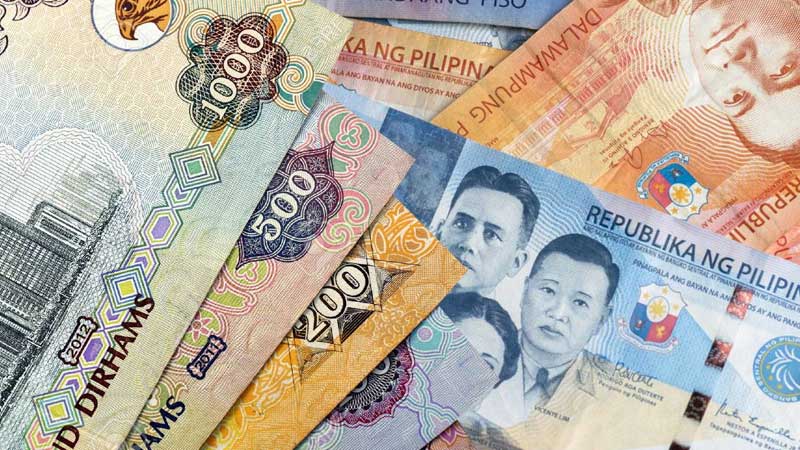
Picture for illustrative purposes only. ARCHIVE
For the first time in recent months, the Philippine peso rose above ₱16 against the UAE dirham, marking a new milestone in the foreign exchange trend. As of 4pm on Tuesday (October 28), the exchange rate stood at ₱16.07 per dirham, based on daily rates from UAE-based LM Exchange. The rate varies slightly across other remittance centers. The last time the peso touched the ₱16 level was in June 2024, when it reached ₱16.05 per dirham. The latest rate triggered a wave of reactions from Overseas Filipino Workers (OFWs) on Expat Media’s page. Many expressed hope that the higher rate would hold until payday, while others were unsure whether the development was good or bad news for their remittances.What does the exchange rate mean?
For OFWs, the exchange rate determines how much peso value their UAE earnings have when sent back home. A higher exchange rate, like ₱16.07 per dirham, means more pesos per dirham — good news for those sending money to the Philippines. However, in financial terms, the latest exchange rate is indicative of a "weak" peso, which means it takes more pesos to buy one dirham, resulting in more pesos for each dirham remitted home. On the other hand, a “strong” peso refers to the opposite: when fewer pesos are needed to buy one dirham. According to the Bangko Sentral ng Pilipinas (BSP), the peso’s value is determined by supply and demand in the foreign exchange market. “The BSP does not set the foreign exchange rate but instead allows the value of the peso to be determined by market forces,” the central bank explained in its Exchange Rate Primer. If more people buy dirhams or dollars, the peso weakens. If more dirhams or dollars are sold, the peso strengthens. The BSP intervenes only to temper sharp fluctuations or ensure legitimate foreign currency demands are met.Who benefits from a strong peso?
A strong peso may not excite remitters, but it offers several key economic benefits: Lower inflation: Imported goods like oil, wheat, and rice become cheaper in peso terms. Reduced debt costs: The government and businesses pay less in pesos to settle foreign loans. Cheaper travel abroad: A stronger peso makes overseas expenses lighter for Filipino travelers and students. Better international reserves: The BSP can more easily build reserves and prepay debt. “A firm peso confers benefits to the economy—the consumers in general, importers, Filipinos who travel or invest abroad, and those who pay for foreign loans,” the BSP said.Who benefits from a weak peso?
On the other hand, a weaker peso — like when rates climb past ₱16 — benefits many OFWs and exporters: Higher remittances in pesos: Every dirham sent home converts to more pesos. Boost to exports: Philippine goods become cheaper and more competitive abroad. Tourism and investment growth: A weaker peso makes the Philippines more affordable to foreign visitors and investors. However, the BSP cautions that a weak peso can also fuel inflation, since imported goods become more expensive.Why it matters to you
For millions of OFWs in the UAE, the peso-dirham rate directly impacts household budgets back home. A small change can mean thousands more or less in remittance value each month. But beyond remittances, the exchange rate serves as a barometer of the Philippine economy’s health — affecting prices, inflation, investment, and debt. Ultimately, whether a “strong” or “weak” peso is good depends on perspective. For OFWs, a higher rate means more take-home money for loved ones. For the economy, a firmer peso means greater stability and lower inflation. ICA/CAM/Expat MediaFor all the latest news from the UAE and the world, follow us on Facebook, Twitter and Instagram and subscribe to our YouTube page











Comments
Leave a Comment