
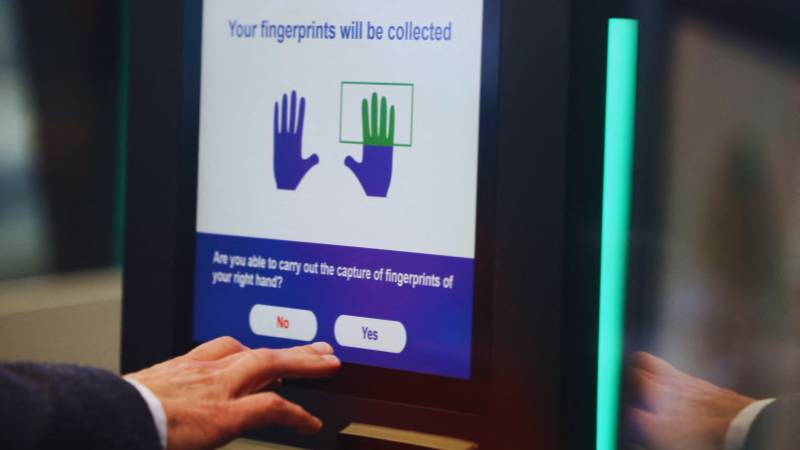
The new biometric scan system for Schengen visitors. SUPPLIED
Starting October 12, 2025, travelers visiting Europe’s Schengen area for the first time will face new border requirements under the European Union’s Entry/Exit System (EES) — a biometric data collection program designed to strengthen security and streamline immigration procedures. The new system will require non-EU citizens entering any Schengen country — including France, Germany, Spain, Italy, the Netherlands, Switzerland, and Norway — to scan their passports, register their fingerprints, and submit a facial scan. The initiative applies to travelers from countries such as the UAE and the UK who do not require a visa for short stays of up to 90 days within a 180-day period. According to EU authorities, the EES replaces manual passport stamping with a digital record that securely links a traveler’s biometric data to their identity, helping border agents detect identity fraud and track overstayers. “The new system will modernize how the EU manages its external borders, prevent illegal migration, and improve security for all travelers,” according to the European Commission. The EES rollout will be gradual, with full implementation expected by April 10, 2026, to prevent congestion at airports and land borders. Once registered, travelers will only need a facial scan for future entries. Children under 12 will also be registered, but only a photograph will be taken instead of fingerprints. On exit, each traveler’s details will be cross-checked against the database to confirm compliance with the EU’s 90-day stay rule. Officials say the EES will make border crossings faster and safer while enhancing the EU’s ability to track overstays and combat document fraud. ICA/Expat MediaFor all the latest news from the UAE and the world, follow us on Facebook, Twitter and Instagram and subscribe to our YouTube page












Comments
Leave a Comment