
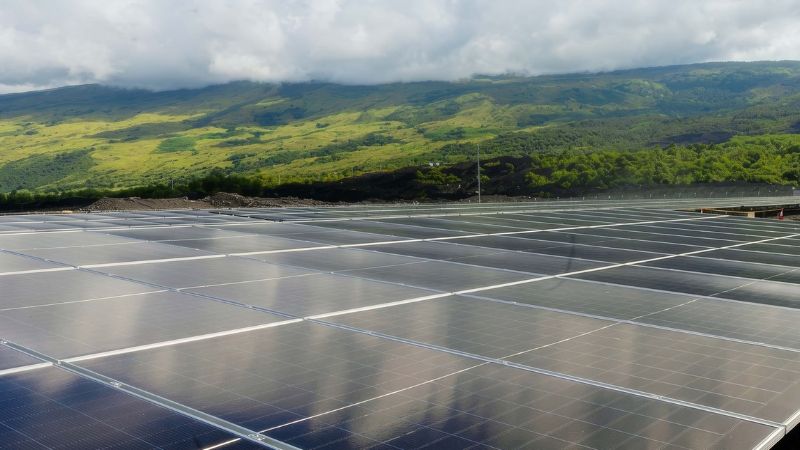
The Sheikh Zayed Solar Power Complex in Jordan. ARCHIVE
The UAE marked Earth Day on Wednesday (April 22) with a renewed focus on sustainability, highlighting major efforts in biodiversity protection, renewable energy, and climate action both at home and abroad. Observed annually on April 22, Earth Day brings attention to pressing environmental challenges such as climate change, pollution, and biodiversity loss. In the UAE, the occasion underscored the country’s long-term strategies, including the UAE Net Zero by 2050 Strategic Initiative and the National Climate Change Plan 2017–2050, which aim to balance economic growth with environmental protection. Environmental efforts in the UAE have expanded significantly in recent years. Authorities have designated 55 protected terrestrial and marine areas, covering more than 19 percent of the country’s total area. Programmes to protect endangered species continue to grow, supported by conservation, breeding, and international partnerships. One of the country’s flagship initiatives is a plan to plant 100 million mangrove trees by 2030, aimed at boosting carbon capture and strengthening coastal ecosystems. New laws regulating international trade in endangered species have also been introduced, reinforcing efforts to protect biodiversity.Oceans, wildlife, and marine life
In Abu Dhabi, the Environment Agency – Abu Dhabi has launched initiatives to enhance marine sustainability, including a programme to double fish stocks by 2030. Officials said the emirate achieved a major milestone by raising its sustainable fishing index to 100 percent by the end of 2025, up from just 8 percent in 2018. Meanwhile, conservation projects led by the Mohamed bin Zayed Species Conservation Fund continue to protect marine species such as dugongs and their habitats.Expanding renewable energy worldwide
The UAE is also extending its sustainability efforts beyond its borders through clean energy investments and development projects. Through Masdar and other partners, the country is supporting solar and wind energy projects across multiple regions. The Abu Dhabi Fund for Development has played a key role in financing renewable energy initiatives. In the Union of Comoros, a solar power plant funded with Dh25.7 million generates 6.3 megawatts of electricity, helping stabilise power supply and reduce reliance on fossil fuels. In Jordan, the Sheikh Zayed Solar Power Complex, funded with Dh551 million, produces 103 megawatts—enough to power more than 50,000 homes. In Seychelles, a Dh103 million wind power project generates 6 megawatts across Mahé Island, supporting the country’s transition to renewable energy. In Mauritania, four wind power stations along the Atlantic coast contribute to local energy needs and climate resilience efforts. These projects aim to reduce carbon emissions, improve energy security, and support sustainable development in partner countries. The UAE is also advancing water security initiatives and is preparing to host the United Nations Water Conference later this year in partnership with Senegal. ICA/Expat MediaFor all the latest news from the UAE and the world, follow us on Facebook, Twitter and Instagram and subscribe to our YouTube page









Comments
Leave a Comment