
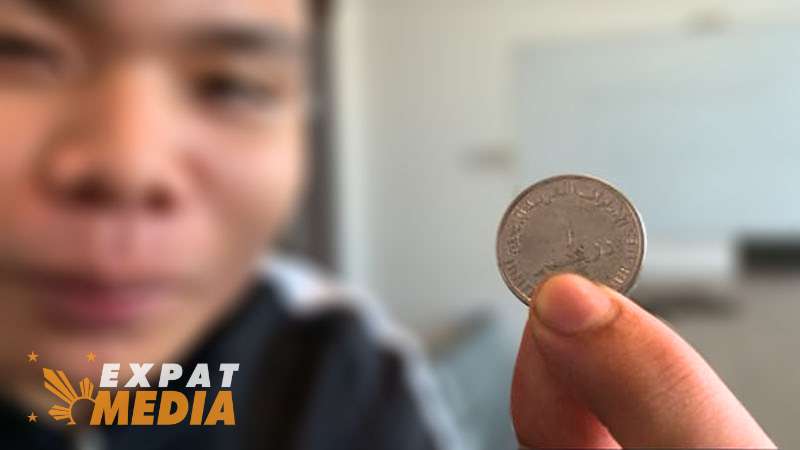
The one dirham coin. EXPAT MEDIA
The UAE’s iconic one dirham coin marked its 52nd anniversary on Monday (May 19), commemorating more than half a century since it was first released into public circulation in 1973. The first one-dirham coin was introduced on May 19, 1973, exactly 534 days after the founding of the UAE on December 2, 1971. The launch of the coin represented a critical step in building the country's national identity and economic sovereignty. Since its introduction, the one dirham coin has retained its distinct reverse design—a dallah, or traditional Arabic coffee pot, which has come to symbolize Gulf hospitality and Arab culture. The dallah is not just a decorative motif but a deep-rooted emblem of Emirati identity and generosity. It also serves as a constant reminder that “all are welcome in the UAE.” What makes the design particularly special is its origin. The first Dh1 coins were produced at the Royal Mint in the United Kingdom and designed by Geoffrey Colley, an English artist, engraver, and sculptor renowned for his work on over 150 coins for countries including Nigeria, Bahrain, Iceland, Iraq, and the UAE. The Emirati dirham—officially abbreviated as AED and unofficially as Dh or Dhs—is the official currency of the UAE. It is subdivided into 100 fils, with the Dh1 coin being the highest denomination in coin form still commonly used in daily transactions. As the dirham plays an essential role in the national economy and heritage, the UAE enforces strict laws to protect its integrity. Under Federal Law, the forgery of currency is a criminal offense with serious consequences. Furthermore, insulting or mocking national symbols—including the dirham, flag, or emblem—is punishable by up to five years in prison and a maximum fine of Dh500,000. ICA/Expat MediaFor all the latest news from the UAE and the world, follow us on Facebook, Twitter and Instagram and subscribe to our YouTube page











Comments
Leave a Comment