
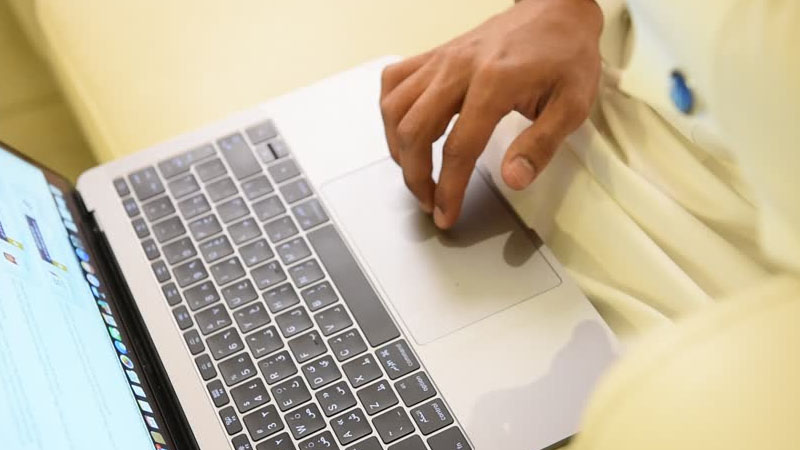
Picture for illustrative purposes only. ARCHIVE
Internet users in the UAE may continue experiencing slower browsing speeds after several undersea cables in the Red Sea were damaged, disrupting online connectivity across the Middle East and Asia. Over the weekend, subscribers of the country’s two main telecom providers, Etisalat by e& and Du, reported sluggish internet performance. In a statement, e& Group said: “Dear customers, you may experience slower data services due to an international submarine cable outage. Our technical teams are currently working to address the issue. We will keep you updated. Thank you for your understanding and cooperation.” Experts confirmed that the disruption stemmed from damage to multiple subsea cable systems near Jeddah, Saudi Arabia. These include the South East Asia–Middle East–Western Europe 4 (SMW4) cable operated by Tata Communications, the India–Middle East–Western Europe (IMEWE) cable managed by a consortium under Alcatel Submarine Networks, and Kuwait’s FALCON GCX cable. According to NetBlocks, an internet observatory, connectivity has degraded in several countries, including the UAE, India, and Pakistan. Microsoft also cautioned that users in the Middle East may continue facing increased latency until rerouting and repairs are completed, although global traffic outside the region remains unaffected. Repairing such subsea cables is often a lengthy process that requires specialized ships and crews to locate and fix the breaks. While causes can include ship anchors or even sabotage, the exact reason for the Red Sea damage has not yet been confirmed. The incident comes amid heightened tensions in the region, where Yemen’s Houthi rebels have repeatedly targeted ships in the Red Sea as part of their campaign against Israel during the Gaza war. While the Houthis have denied responsibility for the cable cuts, analysts say their actions have raised concerns about the vulnerability of global internet infrastructure in the area. For now, UAE users may have to contend with slower speeds until repairs are finalized or rerouting stabilizes regional traffic. ICA/Expat MediaWhat are submarine cables and why do they matter?
• Global internet lifeline: About 95 percent of international internet traffic passes through submarine cables that stretch across oceans and seas. • How they work: These fiber-optic cables transmit huge volumes of data at lightning speed, linking countries and continents. • Vulnerabilities: Cables can be damaged by ship anchors, fishing activities, natural disasters like earthquakes, or even deliberate sabotage. • Why it affects you: When a cable is cut, internet traffic must be rerouted to other lines, causing slower browsing speeds, higher latency, and service interruptions until repairs are done. • Repairs take time: Specialized ships and crews are dispatched to locate the fault, lift the cable, and splice it back together—a process that can take days or even weeks depending on weather and geopolitics.For all the latest news from the UAE and the world, follow us on Facebook, Twitter and Instagram and subscribe to our YouTube page










Comments
Leave a Comment