
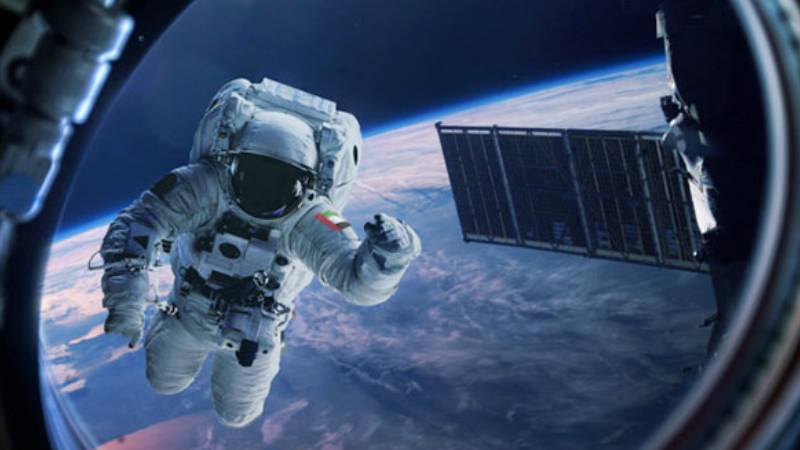
UAE astronaut Sultan Al Neyadi outside the International Space Station in 2023. ARCHIVE
The UAE's ambitious space programs, from the Emirates Lunar Mission in 2024 to the interplanetary mission in 2028, are not just about scientific discovery; they symbolize the nation's boundless aspirations. For a country that was once reliant on oil as its primary economic driver, the shift to space exploration underscores the UAE’s commitment to diversifying its economy and embracing the future of technology. The lunar mission, which will involve a 100 percent Emirati-made rover, marks a significant milestone in the country’s space journey. More importantly, it serves as a platform to develop specialized technologies and capabilities that can be transferred to other sectors, such as healthcare, defense, and communications. The interplanetary mission scheduled for 2028 is another leap forward. By becoming the fourth country in the world to land a spacecraft on an asteroid, the UAE demonstrates its readiness to join the ranks of global space leaders. This bold initiative aligns with the UAE’s Centennial Plan 2071, which envisions the UAE as a hub of science, innovation, and knowledge. Space exploration is not just about reaching the stars—it’s about inspiring future generations to dream big and push boundaries. The UAE’s space missions show that even in a desert, dreams can take flight. About the author: Dunston Pereira is the CEO of the Private Office of Sheikh Ahmed bin Faisal Al Qassimi. The Private Office of Sheikh Ahmed bin Faisal Al Qassimi aims to support businesses and entrepreneurs who want to establish themselves in Dubai and the UAE with a single window platform for multiple activities.
For all the latest news from the UAE and the world, follow us on Facebook, Twitter and Instagram and subscribe to our YouTube page












Comments
Leave a Comment