
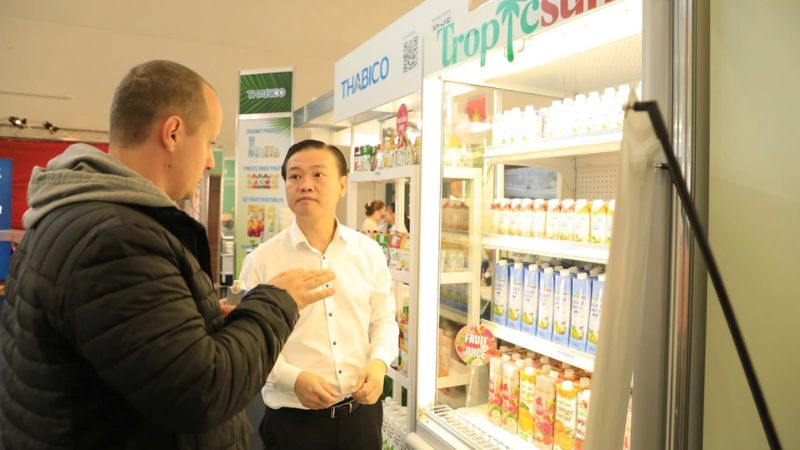
THABICO will be participating in the Beverage Hall at Gulfood 2026 in Dubai. SUPPLIED
Vietnam is making a strategic push at Gulfood 2026 in Dubai, positioning its tropical fruits as essential ingredients in the global beverage value chain as Middle East demand for plant-based and non-alcoholic drinks continues to surge. As countries in the region seek long-term food security solutions, Vietnam is emerging as a key partner, leveraging its tropical climate, year-round harvests, and growing processing capabilities to supply beverage manufacturers with high-quality fruit-based ingredients. According to the Food and Agriculture Organization (FAO), global consumption of plant-based products, particularly fruit-based beverages, is steadily rising. This trend is especially pronounced in the Middle East, which imports more than 80 percent of its food needs due to water scarcity and climate limitations. Against this backdrop, Vietnam is shifting away from exporting raw agricultural produce and moving toward value-added, processed ingredients designed specifically for beverage production. In 2024, Vietnam’s agro-forestry-fishery exports exceeded $53 billion, with processed fruit products posting double-digit growth—a clear signal of the country’s evolving role in global supply chains. Vietnam’s strength lies in its monsoon tropical climate and extensive river systems, particularly in the Mekong Delta and South Central Coast, which serve as hubs for fruit cultivation and processing. As of 2024, the country has more than 1.2 million hectares of fruit plantations, producing over 13 million tonnes annually. Key fruits supporting the beverage sector include mangoes, coconuts, bananas, pineapples, and the rapidly expanding passion fruit category. Crucially for manufacturers, these fruits can be harvested nearly year-round, allowing beverage producers to maintain stable supply chains without seasonal disruption—an advantage few exporting countries can match.Meeting Middle East beverage trends
The Middle East’s growing appetite for non-alcoholic, low-sugar, and plant-based beverages is driving demand for premium fruit inputs. Statista projects the global non-alcoholic beverage market to surpass $1.2 trillion by 2027, with the region identified as a high-growth market due to its young population and expanding tourism sector. Vietnamese companies are aligning closely with these trends, supplying ingredients used in soft drinks, mocktails, functional beverages, and plant-based milk alternatives. One such company is Thabico, a Vietnamese agro-food enterprise set to showcase its products at Gulfood, taking place from January 26 to 30 at the Dubai World Trade Centre. ALSO READ: Thabico shifts to ingredient solutions Unlike traditional agricultural exhibits, Vietnam’s participation at Gulfood reflects a more targeted strategy. Companies like Thabico are exhibiting in the event’s dedicated Beverage Hall, focusing on application-ready solutions rather than bulk commodities. Thabico's portfolio includes NFC (Not From Concentrate) juices, fruit purées, concentrates, IQF fruits, and coconut-based ingredients such as coconut water and coconut milk—key inputs for beverage manufacturers across the Middle East and beyond.
To meet regional requirements, Vietnamese producers have invested heavily in advanced processing technologies that preserve natural flavour while meeting international standards. Products on display are certified under HACCP, ISO, and Halal, making them suitable for Middle East markets.
Trade analysts say Vietnam’s growing presence at Gulfood signals a broader transformation. Rather than simply exporting what it produces, the country is now supplying what global markets demand, particularly in fast-growing segments like beverages.
By aligning its tropical agriculture with industrial needs, Vietnam is positioning itself as a reliable, long-term partner in the global food and beverage ecosystem; using Gulfood Dubai as a gateway to deeper engagement with Middle East manufacturers. ICA/Expat Media
Thabico's portfolio includes NFC (Not From Concentrate) juices, fruit purées, concentrates, IQF fruits, and coconut-based ingredients such as coconut water and coconut milk—key inputs for beverage manufacturers across the Middle East and beyond.
To meet regional requirements, Vietnamese producers have invested heavily in advanced processing technologies that preserve natural flavour while meeting international standards. Products on display are certified under HACCP, ISO, and Halal, making them suitable for Middle East markets.
Trade analysts say Vietnam’s growing presence at Gulfood signals a broader transformation. Rather than simply exporting what it produces, the country is now supplying what global markets demand, particularly in fast-growing segments like beverages.
By aligning its tropical agriculture with industrial needs, Vietnam is positioning itself as a reliable, long-term partner in the global food and beverage ecosystem; using Gulfood Dubai as a gateway to deeper engagement with Middle East manufacturers. ICA/Expat Media
For all the latest news from the UAE and the world, follow us on Facebook, Twitter and Instagram and subscribe to our YouTube page







Comments
Leave a Comment