

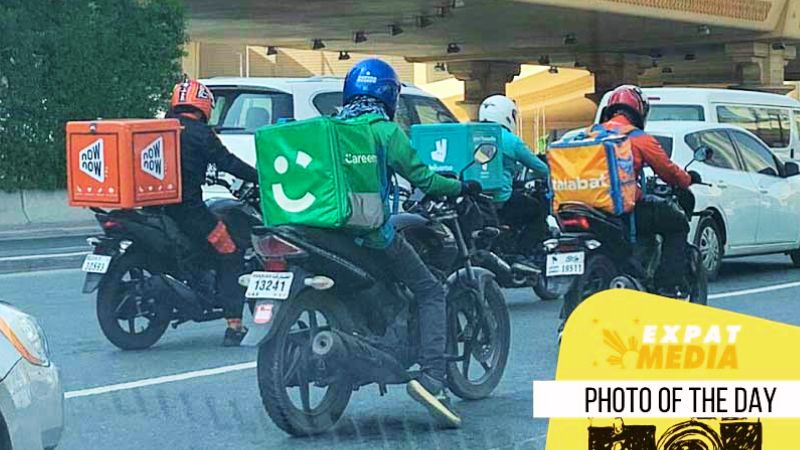
Picture for illustrative purposes only. ARCHIVE
Tax-free commodities, a plethora of entertainment options and frequent sale seasons can be distracting to anyone who might want to save money in Dubai or anywhere in the UAE. However, it is possible to live a financially fit life in the emirate, and save extra cash for your security. Here are top 15 tips: 15. Plan your yearly holidays so you can buy your airline tickets in advance. Airline tickets are usually cheaper when bought at least six months ahead of your travel date. Also, try booking online at around midnight when some airlines offer “midnight sale” on seats. You can also subscribe to airlines' email alerts so you'll always be the first to know of any promotions. 14. When sending a considerable sum of money home, don’t go with the flow. Exchange rates are usually high at mid-month or end of the month because this is when people receive their salaries and are likely to remit money. If possible, wait when the exchange rate dips (which means you get more peso for your dirham) before you send money to the Philippines. 13. Prefer to buy quality, used items that you need. You don’t have to spend a fortune on new furniture, unless you want to. There’s plenty advertised on online classifieds, or in second-hand stores in Dubai. Another Filipino favourite is the bi-monthly flea market in Safa Park. 12. If you don’t have accommodation or transportation paid for by your company, rent a place that is closer to your workplace. You can save time and money if you are spared a long commute. 11. Plan your trips using public buses or the Dubai Metro. The fares are a fraction of what you would spend compared to riding a taxi. If you must have a car, it is more economical to buy one in good condition (to spare you from maintenance woes) than lease one. However, make sure you have free parking space, and factor in yearly costs like vehicle registration renewal, vehicle insurance and toll fees. 10. Look for free entertainment. Beaches or parks are great places to unwind and entertain yourself with friends or family. You can also check out free shows and events at the malls, particularly during the shopping festivals. 9. If you are living alone or renting a shared apartment, it might be a good idea to buy cooked food in small portions from supermarkets and hypermarkets like Carrefour, Spinneys or New WestZone. You can ask for servings within your budget. This way you are saving time and effort from preparing your food. 8. If you must cook, include more vegetables on the menu. They’re cheaper, quicker to prepare and healthier, too. 7. Regularly check supermarkets and hypermarkets for special offers or deeply discounted prices on stocks for clearance. Most Filipinos head to Baqer Mohebi for discounted prices on boxes of chocolates to ship home, while New WestZone or Al Maya Lals are the go-to places for cheaper Philippine food items. For other commodities, check out three of the biggest hypermarkets in the country: Carrefour, Lulu and Geant. 6. Shop, dine or get service from establishments that offer loyalty points or rewards. Also check out offers on deal websites. There is usually a buy one get one offer on leisure trips, restaurant meals and other deals. 5. Get a pre-paid internet subscription on your smartphone that will allow you to use software like WhatsApp, Skype or Viber so you can call or message folks back home for free anytime, or when you are feeling homesick. 4. Try not to eat out frequently, but when you do, don’t be embarrassed to have your leftover food packed so you can eat it at home later. 3. If you can’t wait to do your shopping during sale season, shop at outlet stores instead (ask the store staff for the location). A more popular destination is the Outlet Mall, which houses all the outlet stores in one mall. 2. Don’t use a credit card, unless you can pay what you owe in full before interest accrues at the end of the month. But remember: It is always better to spend only what you have. 1. Save a portion of your salary. Always. The money you save now is not just for your retirement, but it can also be a much-needed fund for emergencies." byline="Barney Almazar" credits="EXPAT MEDIA" caption="Picture for illustrative purposes only."]Legally speaking: visa renewal with bounced cheque case
An expat in the UAE reached out with a question on her upcoming visa renewal that she believes will be made complicated because of her ongoing police case for a bounced cheque. Legal expert Barney Almazar of Gulf Law explains the legalities. Reader asks: I defaulted in paying my loan and the bank filed a police case against me in 2021. My visa is expiring soon and my company has already made a reminder about my visa renewal. I did not tell them that I have a pending police case because I am afraid that they might terminate my employment. Please advise how I can resolve this problem.Atty. Barney answers: Since 2022, the issuance of a bounced cheque is no longer a criminal offense. The police will no longer accept bounced cheque cases and all existing bounced cheque cases (such as the one filed against you) can be cancelled by simply visiting the police station and requesting a cancellation by paying a fine as per the new law. Once your case has been cancelled, you can already process your visa renewal. It is important to note that even if your police case has been cancelled, the bank can still collect your outstanding liability by filing a collection case which is civil in nature. A travel ban will be imposed against you which can only be lifted once you have satisfied the payment as ordered by the execution court. You should contact your bank with the aim of getting a Settlement Agreement to pay your outstanding liabilities. Interest charges, penalties and other fees can be waived, even portions of your principal loan depending on your payment history and personal circumstances. It is strongly recommended that you start making payments once you have a Settlement Agreement issued by the bank. The Settlement Agreement must clearly state that the bank is accepting a lower amount as full and final payment of all your liabilities and all pending cases will be cancelled. If you do not have a pending case at the time of settlement, the bank must undertake not to file any case against you in the future. Atty. Barney Almazar is a director at Gulf Law in the UAE, Philippines, UK and Portugal. He is a member of the Philippine Bar and holds a UAE legal consultancy license. He is listed by Thomsom Reuters as one of the Super 50 lawyers in the Middle East and North Africa. Asian Legal Business has ranked him as top lawyer in the Philippines, Southeast Asia and Middle East. barney@gulflaw.info, +971558650248 This story also appears in the Expat Media Special Edition magazine
For all the latest news from the UAE and the world, follow us on Facebook, Twitter and Instagram and subscribe to our YouTube page















Comments
Leave a Comment